
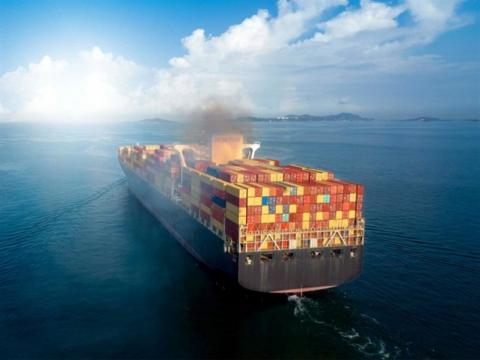
The continued interruption of maritime transport transit through the Red Sea area is increasing emissions from ships that must be diverted from the Suez Canal to take much longer routes and thus be able to reach key markets in the world, Reuters reports.
For shipping lines, longer itineraries can result in higher vessel freight, fuel and labor rates and can often also result in a higher delay cost to importers who contracted for delivery on a certain date.
Longer distances also result in higher emissions during the itinerary, although the exact extent of the emissions change varies depending on the age of the ship and the fuel mix used.
For an average container ship carrying 150,000 metric tons of cargo, the estimated total emissions for each trip from southern China to Rotterdam via the Suez Canal are around 41,000 tons of carbon dioxide (CO2), according to Pier2Pier.com .
That emissions figure increases to around 55,000 tonnes when transiting the southern tip of Africa, which is equivalent to approximately 14,000 tonnes more CO2 for each ship that must take the longer route to Europe.
More than 20 container ships are estimated to have sailed from China to Rotterdam in the last 30 days, according to the London Stock Exchange Group (LSEG), so the cumulative cost of increased emissions is likely to have increased by several hundred thousand tons in the last month.
Increase browsing speed
The reported cost could be even higher, as several container ships have increased their sailing speeds so far this year compared to the 2023 average, in part to make up time on longer itineraries.
The average speed of large container ships so far in 2024 is just over 16 knots, according to LSEG. That compares to an average of 15.19 knots for 2023 as a whole, and represents a roughly 5% increase in average sailing speeds this year.
Since ships emit more pollution the faster they travel, any sustained increase in shipping speeds this year could result in an additional increase in emissions on top of that linked to longer itinerary distances. So any further increase in the number and type of ships needed to reroute through the Suez Canal to southern Africa may further increase emissions from shipping.