Outlook 2024 for maritime, air and road transport is characterized by volatility in the face of exceptional conditions.


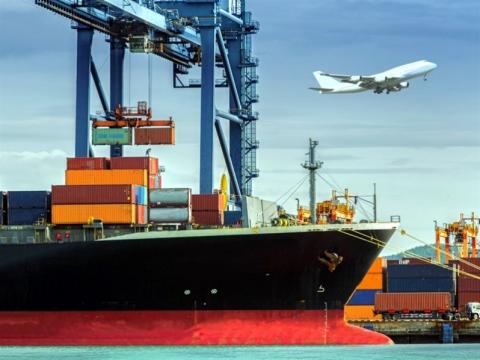
The "supply" of the logistics sector has experienced as much volatility as the demand. The strong fluctuations in demand have been amplified by exceptional conditions that have affected supply. This has had a long-term impact on capacity availability in a number of markets, notably container shipping, the air cargo sector and, to a lesser extent, road transport. To aggravate the evolution in the medium term, short-term problems continue to arise, especially around the Suez and Panama canals, according to a Ti report.
Marine transport
The "supply" of the maritime transport market is notable for being very well supplied, with an exceptionally high order book. In fact, Ti points out that, in terms of gross capacity, the order book is the largest on record, with an estimate of 7.5 million TEUs. This represents a capacity equivalent to 28-30% of the current container ship fleet. But, in addition to the volume of capacity of the vessels entering the market, it is important to understand their introduction schedule in any attempt to estimate their impact on the market. Along those lines, Ti says that most of the new ships will enter service between 2025-2026.
On the other hand, to calculate market capacity, a key variable is the level of scrapping. Scrapping has been very low since 2020, resulting in an increase in the age of vessels in operation and, although there is no longer a shortage of vessels, container capacity on vessels continues to be utilized at a high level. This has been amplified by events such as the Red Sea crisis. Therefore, the incentive to scrap ships remains lower than in the period before 2020.
It is true that many new vessels are built with engines and hulls optimized for low speeds, however, it is still unclear whether this is enough to drive fleet replacement. Therefore, it is most likely that the level of scrapping will increase, but it is not known to what extent.
Terminals and ground transportation
The congestion crisis of 2020-2022 underlined the key point that the container shipping sector is a system composed of several key elements, of which terminals and their land transport systems are essential parts. The 2020-2022 congestion problems in North America were largely due to the inability of rail systems to absorb a surge of containers from West Coast ports. This problem also exists in Europe, with ports such as Antwerp and Rotterdam.
Another aspect of this infrastructure problem is that of the large canals. Both the Panama and Suez Canals have suffered significant disruptions in the last six months. This illustrates that shipping infrastructure is suffering from an investment imbalance, with considerable investment in container terminals in certain regions, but less in other types of infrastructure.
Air Transport
The capacity picture for air cargo is not as volatile as that for maritime transport. Cargo in the hold increased 25% year-on-year in January 2024. It should be noted that its availability is determined by the growth in passenger volume, which has been strong. Therefore, the medium-term prospects for the transportation of goods in warehouses appear to be one of continued expansion.
Something less clear from the IATA data, however, is the trajectory of cargo planes. Both FedEx and UPS have moderated the growth of their fleets or reduced them, in response to a less buoyant e-commerce market in the US. Another aspect to highlight is the introduction of shipping lines into the market. CMA-CGM and Maersk, in particular, have invested aggressively in cargo aircraft, apparently both to support their broader logistics ambitions and to provide capacity to the broader market.
Specifically, both in the short and medium term, one of the limitations of the market could be the shortage of aircraft. Although aircraft deliveries remain elevated, Boeing's problems and their impact on the production slowdown in 2020-2022 have created a backlog of orders that will take some time to fill.
Road transport
Compared to air and sea transport, the supply of road freight transport in Western markets is currently quite stable. This mode of transport relies on a much more fragmented offering, with many trucking operations run by "owner-drivers" or small businesses that can outsource to larger logistics service providers.
Although it is worth noting that some of the main road freight transport providers in the US have moved away from this model. In general, however, the dynamics of supply and demand are very different from those of air and sea transport. This means that supply can respond better to demand signals than sea or air transport.
Add new comment